imo.im is a proprietary audio/video calling and instant messaging software service. It allows sending music, video, PDFs and other files, along with various free stickers. It supports encrypted group video and voice calls with up to 20 participants. According to its developer, the service possesses over 200 million users and over 50 million messages per day are sent through it. == History == The product was created as a web-based application in 2005 for accessing multiple chat platforms, including Facebook Messenger, Google Talk, Yahoo! Messenger, and Skype chat. It was developed by Pagebites, which is a subsidiary of Singularity IM, Inc. and required a subscriber's phone number to verify the users' account. In March 2014, support for all third-party messaging networks ended. In January 2018, the app reached 500 million installs. imo.im has implemented end-to-end encryption for its chats and calls, ensuring that the conversations remain private between the sender and receiver.
Scale space
Scale-space theory is a framework for multi-scale signal representation developed by the computer vision, image processing and signal processing communities with complementary motivations from physics and biological vision. It is a formal theory for handling image structures at different scales, by representing an image as a one-parameter family of smoothed images, the scale-space representation, parametrized by the size of the smoothing kernel used for suppressing fine-scale structures. The parameter t {\displaystyle t} in this family is referred to as the scale parameter, with the interpretation that image structures of spatial size smaller than about t {\displaystyle {\sqrt {t}}} have largely been smoothed away in the scale-space level at scale t {\displaystyle t} . The main type of scale space is the linear (Gaussian) scale space, which has wide applicability as well as the attractive property of being possible to derive from a small set of scale-space axioms. The corresponding scale-space framework encompasses a theory for Gaussian derivative operators, which can be used as a basis for expressing a large class of visual operations for computerized systems that process visual information. This framework also allows visual operations to be made scale invariant, which is necessary for dealing with the size variations that may occur in image data, because real-world objects may be of different sizes and in addition the distance between the object and the camera may be unknown and may vary depending on the circumstances. == Definition == The notion of scale space applies to signals of arbitrary numbers of variables. The most common case in the literature applies to two-dimensional images, which is what is presented here. Consider a given image f {\displaystyle f} where f ( x , y ) {\displaystyle f(x,y)} is the greyscale value of the pixel at position ( x , y ) {\displaystyle (x,y)} . The linear (Gaussian) scale-space representation of f {\displaystyle f} is a family of derived signals L ( x , y ; t ) {\displaystyle L(x,y;t)} defined by the convolution of f ( x , y ) {\displaystyle f(x,y)} with the two-dimensional Gaussian kernel g ( x , y ; t ) = 1 2 π t e − ( x 2 + y 2 ) / 2 t {\displaystyle g(x,y;t)={\frac {1}{2\pi t}}e^{-(x^{2}+y^{2})/2t}\,} such that L ( ⋅ , ⋅ ; t ) = g ( ⋅ , ⋅ ; t ) ∗ f ( ⋅ , ⋅ ) , {\displaystyle L(\cdot ,\cdot ;t)\ =g(\cdot ,\cdot ;t)f(\cdot ,\cdot ),} where the semicolon in the argument of L {\displaystyle L} implies that the convolution is performed only over the variables x , y {\displaystyle x,y} , while the scale parameter t {\displaystyle t} after the semicolon just indicates which scale level is being defined. This definition of L {\displaystyle L} works for a continuum of scales t ≥ 0 {\displaystyle t\geq 0} , but typically only a finite discrete set of levels in the scale-space representation would be actually considered. The scale parameter t = σ 2 {\displaystyle t=\sigma ^{2}} is the variance of the Gaussian filter and as a limit for t = 0 {\displaystyle t=0} the filter g {\displaystyle g} becomes an impulse function such that L ( x , y ; 0 ) = f ( x , y ) , {\displaystyle L(x,y;0)=f(x,y),} that is, the scale-space representation at scale level t = 0 {\displaystyle t=0} is the image f {\displaystyle f} itself. As t {\displaystyle t} increases, L {\displaystyle L} is the result of smoothing f {\displaystyle f} with a larger and larger filter, thereby removing more and more of the details that the image contains. Since the standard deviation of the filter is σ = t {\displaystyle \sigma ={\sqrt {t}}} , details that are significantly smaller than this value are to a large extent removed from the image at scale parameter t {\displaystyle t} , see the following figures and for graphical illustrations. === Why a Gaussian filter? === When faced with the task of generating a multi-scale representation one may ask: could any filter g of low-pass type and with a parameter t which determines its width be used to generate a scale space? The answer is no, as it is of crucial importance that the smoothing filter does not introduce new spurious structures at coarse scales that do not correspond to simplifications of corresponding structures at finer scales. In the scale-space literature, a number of different ways have been expressed to formulate this criterion in precise mathematical terms. The conclusion from several different axiomatic derivations that have been presented is that the Gaussian scale space constitutes the canonical way to generate a linear scale space, based on the essential requirement that new structures must not be created when going from a fine scale to any coarser scale. Conditions, referred to as scale-space axioms, that have been used for deriving the uniqueness of the Gaussian kernel include linearity, shift invariance, semi-group structure, non-enhancement of local extrema, scale invariance and rotational invariance. In the works, the uniqueness claimed in the arguments based on scale invariance has been criticized, and alternative self-similar scale-space kernels have been proposed. The Gaussian kernel is, however, a unique choice according to the scale-space axiomatics based on causality or non-enhancement of local extrema. === Alternative definition === Equivalently, the scale-space family can be defined as the solution of the diffusion equation (for example in terms of the heat equation), ∂ t L = 1 2 ∇ 2 L , {\displaystyle \partial _{t}L={\frac {1}{2}}\nabla ^{2}L,} with initial condition L ( x , y ; 0 ) = f ( x , y ) {\displaystyle L(x,y;0)=f(x,y)} . This formulation of the scale-space representation L means that it is possible to interpret the intensity values of the image f as a "temperature distribution" in the image plane and that the process that generates the scale-space representation as a function of t corresponds to heat diffusion in the image plane over time t (assuming the thermal conductivity of the material equal to the arbitrarily chosen constant 1/2). Although this connection may appear superficial for a reader not familiar with differential equations, it is indeed the case that the main scale-space formulation in terms of non-enhancement of local extrema is expressed in terms of a sign condition on partial derivatives in the 2+1-D volume generated by the scale space, thus within the framework of partial differential equations. Furthermore, a detailed analysis of the discrete case shows that the diffusion equation provides a unifying link between continuous and discrete scale spaces, which also generalizes to nonlinear scale spaces, for example, using anisotropic diffusion. Hence, one may say that the primary way to generate a scale space is by the diffusion equation, and that the Gaussian kernel arises as the Green's function of this specific partial differential equation. == Motivations == The motivation for generating a scale-space representation of a given data set originates from the basic observation that real-world objects are composed of different structures at different scales. This implies that real-world objects, in contrast to idealized mathematical entities such as points or lines, may appear in different ways depending on the scale of observation. For example, the concept of a "tree" is appropriate at the scale of meters, while concepts such as leaves and molecules are more appropriate at finer scales. For a computer vision system analysing an unknown scene, there is no way to know a priori what scales are appropriate for describing the interesting structures in the image data. Hence, the only reasonable approach is to consider descriptions at multiple scales in order to be able to capture the unknown scale variations that may occur. Taken to the limit, a scale-space representation considers representations at all scales. Another motivation to the scale-space concept originates from the process of performing a physical measurement on real-world data. In order to extract any information from a measurement process, one has to apply operators of non-infinitesimal size to the data. In many branches of computer science and applied mathematics, the size of the measurement operator is disregarded in the theoretical modelling of a problem. The scale-space theory on the other hand explicitly incorporates the need for a non-infinitesimal size of the image operators as an integral part of any measurement as well as any other operation that depends on a real-world measurement. There is a close link between scale-space theory and biological vision. Many scale-space operations show a high degree of similarity with receptive field profiles recorded from the mammalian retina and the first stages in the visual cortex. In these respects, the scale-space framework can be seen as a theoretically well-founded paradigm for early vision, which in addition has been thoroughly tested by algorithms and experiments. == Gaussian derivatives == At any scale in scale space, we c
Cognitive robotics
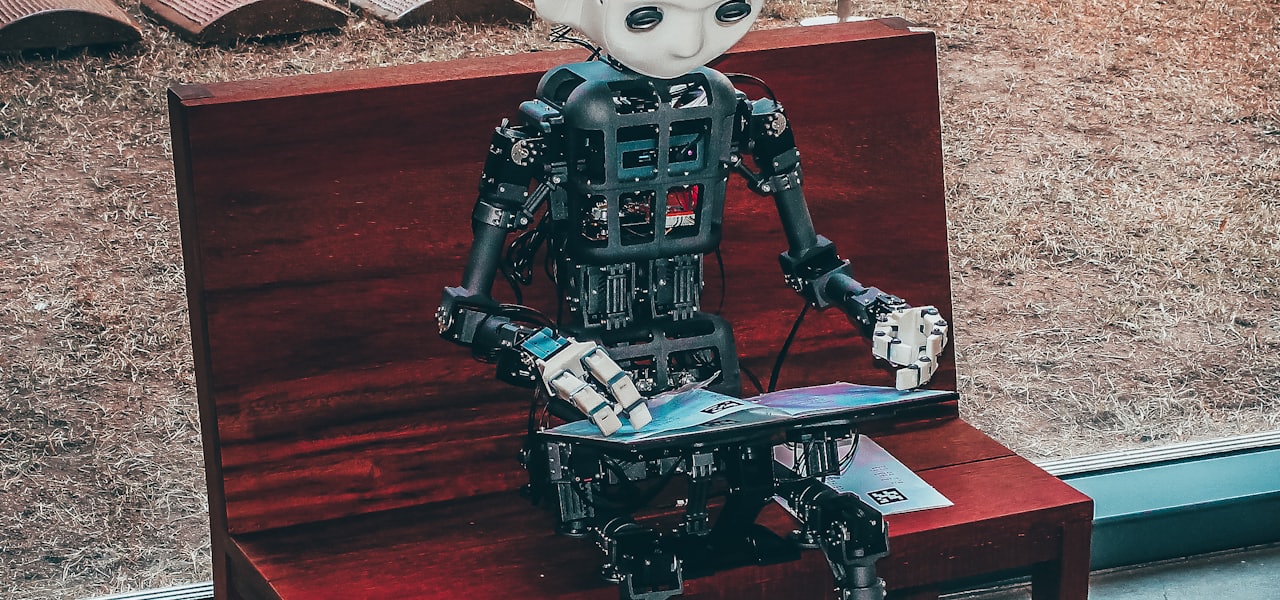
Cognitive robotics or cognitive technology is a subfield of robotics concerned with endowing a robot with intelligent behavior by providing it with a processing architecture that will allow it to learn and reason about how to behave in response to complex goals in a complex world. Cognitive robotics may be considered the engineering branch of embodied cognitive science and embodied embedded cognition, consisting of robotic process automation, artificial intelligence, machine learning, deep learning, optical character recognition, image processing, process mining, analytics, software development and system integration. == Core issues == While traditional cognitive modeling approaches have assumed symbolic coding schemes as a means for depicting the world, translating the world into these kinds of symbolic representations has proven to be problematic if not untenable. Perception and action and the notion of symbolic representation are therefore core issues to be addressed in cognitive robotics. == Starting point == Cognitive robotics views human or animal cognition as a starting point for the development of robotic information processing, as opposed to more traditional artificial intelligence techniques. Target robotic cognitive capabilities include perception processing, attention allocation, anticipation, planning, complex motor coordination, reasoning about other agents and perhaps even about their own mental states. Robotic cognition embodies the behavior of intelligent agents in the physical world (or a virtual world, in the case of simulated cognitive robotics). Ultimately, the robot must be able to act in the real world. == Learning techniques == === Motor Babble === A preliminary robot learning technique called motor babbling involves correlating pseudo-random complex motor movements by the robot with resulting visual and/or auditory feedback such that the robot may begin to expect a pattern of sensory feedback given a pattern of motor output. Desired sensory feedback may then be used to inform a motor control signal. This is thought to be analogous to how a baby learns to reach for objects or learns to produce speech sounds. For simpler robot systems, where, for instance, inverse kinematics may feasibly be used to transform anticipated feedback (desired motor result) into motor output, this step may be skipped. === Imitation === Once a robot can coordinate its motors to produce a desired result, the technique of learning by imitation may be used. The robot monitors the performance of another agent and then the robot tries to imitate that agent. It is often a challenge to transform imitation information from a complex scene into a desired motor result for the robot. Note that imitation is a high-level form of cognitive behavior and imitation is not necessarily required in a basic model of embodied animal cognition. === Knowledge acquisition === A more complex learning approach is "autonomous knowledge acquisition": the robot is left to explore the environment on its own. A system of goals and beliefs is typically assumed. A somewhat more directed mode of exploration can be achieved by "curiosity" algorithms, such as Intelligent Adaptive Curiosity or Category-Based Intrinsic Motivation. These algorithms generally involve breaking sensory input into a finite number of categories and assigning some sort of prediction system (such as an artificial neural network) to each. The prediction system keeps track of the error in its predictions over time. Reduction in prediction error is considered learning. The robot then preferentially explores categories in which it is learning (or reducing prediction error) the fastest. == Other architectures == Some researchers in cognitive robotics have tried using architectures such as (ACT-R and Soar (cognitive architecture)) as a basis of their cognitive robotics programs. These highly modular symbol-processing architectures have been used to simulate operator performance and human performance when modeling simplistic and symbolized laboratory data. The idea is to extend these architectures to handle real-world sensory input as that input continuously unfolds through time. What is needed is a way to somehow translate the world into a set of symbols and their relationships. == Questions == Some of the fundamental questions to be answered in cognitive robotics are: How much human programming should or can be involved to support the learning processes? How can one quantify progress? Some of the adopted ways are reward and punishment. But what kind of reward and what kind of punishment? In humans, when teaching a child, for example, the reward would be candy or some encouragement, and the punishment can take many forms. But what is an effective way with robots?
Instance selection
Instance selection (or dataset reduction, or dataset condensation) is an important data pre-processing step that can be applied in many machine learning (or data mining) tasks. Approaches for instance selection can be applied for reducing the original dataset to a manageable volume, leading to a reduction of the computational resources that are necessary for performing the learning process. Algorithms of instance selection can also be applied for removing noisy instances, before applying learning algorithms. This step can improve the accuracy in classification problems. Algorithm for instance selection should identify a subset of the total available data to achieve the original purpose of the data mining (or machine learning) application as if the whole data had been used. Considering this, the optimal outcome of IS would be the minimum data subset that can accomplish the same task with no performance loss, in comparison with the performance achieved when the task is performed using the whole available data. Therefore, every instance selection strategy should deal with a trade-off between the reduction rate of the dataset and the classification quality. == Instance selection algorithms == The literature provides several different algorithms for instance selection. They can be distinguished from each other according to several different criteria. Considering this, instance selection algorithms can be grouped in two main classes, according to what instances they select: algorithms that preserve the instances at the boundaries of classes and algorithms that preserve the internal instances of the classes. Within the category of algorithms that select instances at the boundaries it is possible to cite DROP3, ICF and LSBo. On the other hand, within the category of algorithms that select internal instances, it is possible to mention ENN and LSSm. In general, algorithm such as ENN and LSSm are used for removing harmful (noisy) instances from the dataset. They do not reduce the data as the algorithms that select border instances, but they remove instances at the boundaries that have a negative impact on the data mining task. They can be used by other instance selection algorithms, as a filtering step. For example, the ENN algorithm is used by DROP3 as the first step, and the LSSm algorithm is used by LSBo. There is also another group of algorithms that adopt different selection criteria. For example, the algorithms LDIS, CDIS and XLDIS select the densest instances in a given arbitrary neighborhood. The selected instances can include both, border and internal instances. The LDIS and CDIS algorithms are very simple and select subsets that are very representative of the original dataset. Besides that, since they search by the representative instances in each class separately, they are faster (in terms of time complexity and effective running time) than other algorithms, such as DROP3 and ICF. Besides that, there is a third category of algorithms that, instead of selecting actual instances of the dataset, select prototypes (that can be synthetic instances). In this category it is possible to include PSSA, PSDSP and PSSP. The three algorithms adopt the notion of spatial partition (a hyperrectangle) for identifying similar instances and extract prototypes for each set of similar instances. In general, these approaches can also be modified for selecting actual instances of the datasets. The algorithm ISDSP adopts a similar approach for selecting actual instances (instead of prototypes).
Isotropic position
In the fields of machine learning, the theory of computation, and random matrix theory, a probability distribution over vectors is said to be in isotropic position if its covariance matrix is proportional to the identity matrix. == Formal definitions == Let D {\textstyle D} be a distribution over vectors in the vector space R n {\textstyle \mathbb {R} ^{n}} . Then D {\textstyle D} is in isotropic position if, for vector v {\textstyle v} sampled from the distribution, E v v T = I d . {\displaystyle \mathbb {E} \,vv^{\mathsf {T}}=\mathrm {Id} .} A set of vectors is said to be in isotropic position if the uniform distribution over that set is in isotropic position. In particular, every orthonormal set of vectors is isotropic. As a related definition, a convex body K {\textstyle K} in R n {\textstyle \mathbb {R} ^{n}} is called isotropic if it has volume | K | = 1 {\textstyle |K|=1} , center of mass at the origin, and there is a constant α > 0 {\textstyle \alpha >0} such that ∫ K ⟨ x , y ⟩ 2 d x = α 2 | y | 2 , {\displaystyle \int _{K}\langle x,y\rangle ^{2}dx=\alpha ^{2}|y|^{2},} for all vectors y {\textstyle y} in R n {\textstyle \mathbb {R} ^{n}} ; here | ⋅ | {\textstyle |\cdot |} stands for the standard Euclidean norm.
NCover
NCover is a .NET code coverage tool. There are two non-related NCover products that do .NET code coverage. There is an open source NCover that can be found on SourceForge and there is a company called NCover, LLC. There has been additional development on both products since this 2004 reference. The company NCover, LLC began when the founder, Peter Waldschmidt, decided to commercialize the open source tool he created. The commercial versions were launched in 2007, but the last supported free version 1.5.8 is still available on the company site.
Operation Serenata de Amor
Operation Serenata de Amor is an artificial intelligence project designed to analyze public spending in Brazil. The project has been funded by a recurrent financing campaign since September 7, 2016, and came in the wake of major scandals of misappropriation of public funds in Brazil, such as the Mensalão scandal and what was revealed in the Operation Car Wash investigations. The analysis began with data from the National Congress then expanded to other types of budget and instances of government, such as the Federal Senate. The project is built through collaboration on GitHub and using a public group with more than 600 participants on Telegram. The name "Serenata de Amor," which means "serenade of love," was taken from a popular cashew cream bonbon produced by Chocolates Garoto in Brazil. == Modules == Throughout development of the project, new modules have been newly introduced in addition to the main repository: The main repository, serenata-de-amor, serves as the starting point for investigative work. Rosie is the robot programmed to identify public funds expenses with discrepancies, starting with CEAP (Quota for Exercise of Parliamentary Activity); it analyzes each of the reimbursements requested by the deputies and senators, indicating the reasons that lead it to believe they are suspicious. From Rosie was born whistleblower, which tweets under the name of @RosieDaSerenata, distributing the results found on social media. Jarbas (Github repository) is a data visualization tool which shows a complete list of reimbursements made available by the Chamber of Deputies and mined by Rosie. Toolbox is a Python installable package that supports the development of Serenata de Amor and Rosie. == History == Operation Serenata de Amor is an Artificial intelligence project for analysis of public expenditures. It was conceived in March 2016 by data scientist Irio Musskopf, sociologist Eduardo Cuducos and entrepreneur Felipe Cabral. The project was financed collectively in the Catarse platform, where it reached 131% of the collection goal paying 3 months of project development. Ana Schwendler, also a data scientist, Pedro Vilanova "Tonny", data journalist, Bruno Pazzim, software engineer, Filipe Linhares, a frontend engineer, Leandro Devegili, an entrepreneur and André Pinho took the first steps towards constructing the platform, such as collecting and structuring the first datasets. Jessica Temporal, data scientist and Yasodara Córdova "Yaso", researcher, Tatiana Balachova "Russa", UX designer, joined the project after the financing took place. The members created a recurring financing campaign, expanding the analysis of public spending to the Federal Senate. Donors make monthly payments ranging from 5 BRL to 200 BRL to maintain group activities. The monthly amount collected is around 10,000 BRL. == Results == In January 2017, concluding the period financed by the initial campaign, the group carried out an investigation into the suspicious activities found by the data analysis system. 629 complaints were made to the Ombudsman's Office of the Chamber of Deputies, questioning expenses of 216 federal deputies. In addition, the Facebook project page has more than 25,000 followers, and users frequently cite the operation as a benchmark in transparency in the Brazilian government. One of the examples of results obtained by the operation is the case of the Deputy who had to return about 700 BRL to the House after his expenses were analyzed by the platform. The platform was able to analyze more than 3 million notes, raising about 8,000 suspected cases in public spending. The community that supports the work of the team benefits from open source repositories, with licenses open for the collaboration. So much so that the two main data scientists of the project presented it at the CivicTechFest in Taipei, obtaining several mentions even in the international press. The technical leader presented the project in Poland during DevConf2017 in Kraków. It was also presented in the Google News Lab in 2017. It was presented by Yaso, when she was the Director of the initiative, at the MIT Media Lab/Berkman Klein Center Initiative for Artificial Intelligence ethics, and at the Artificial Intelligence and Inclusion Symposium, an initiative of the Global Network of Internet & Society Centers (NoC). It was also presented both by Irio and Yaso at the Digital Harvard Kennedy School, over a lunch seminar, where the transparency of the platform and the main solutions found were discussed, so that the code and data are always available to verify its suitability. This infographic provides information about the first results of Operation Serenata de Amor, a project that analyzes open data on public spending to find discrepancies. The project was presented by Yaso to the House Audit and Control Committee of the Chamber of Deputies in August 2017, and raised the interest of House officials who work with open data. The operation has been a source of inspiration for other civic projects that aim to work with similar goals, demonstrating the broader impact of artificial intelligence also in industry in Brazil. Participation of several team members in events throughout Brazil and abroad can be found on the Internet, such as presentation at OpenDataDay, held at Calango Hackerspace in the Federal District, Campus Party Bahia, Campus Party Brasilia, Friends of Tomorrow, XIII National Meeting of Internal Control, in the event USP Talks Hackfest against corruption in João Pessoa, the latter being also highlighted in the National Press.